Smart Chemical Management for Schools
By Annette Satterly, MTSBA/MSGIA Risk Management Associate
Have you ever stopped to consider how many chemicals are present in your school building(s)? Once you start counting, you are going to be surprised. Think about all the areas where chemicals may be stored: science classrooms, art rooms, industrial arts and vocational agriculture shops, kitchens and FCS rooms, custodial closets, classrooms, offices, and the transportation shop, to name a few. Now, consider how (and if) all those chemicals are inventoried and disposed of when needed.
The Problems
Many Montana schools do not have complete chemical inventories, nor are staff trained in handling chemical incidents. To cause further complication, many schools have chemicals they want to dispose of, but don’t know where to start. Unfortunately, many schools are on the teetering edge of a chemical problem they aren’t even aware is about to occur.
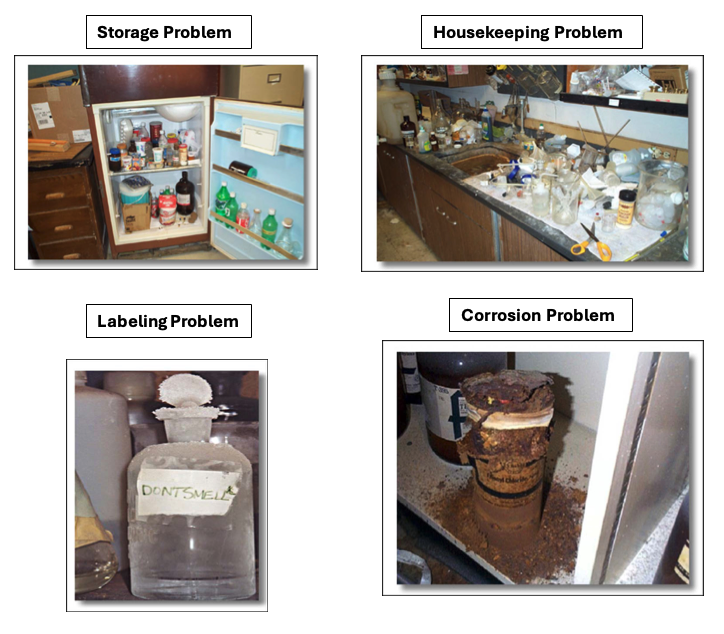
Problems can take many forms: poor storage, housekeeping issues, corrosion, labeling errors, or missing labels. Even properly labeled and stored chemicals can become dangerous if mishandled, as well as equipment that seems harmless, but can pose hazards if broken or used incorrectly.
Ask yourself:
· Do you have staff trained to handle chemical incidents?
· Have staff been trained to recognize hazards and know what they should or shouldn’t handle?
· Are they trained in proper disposal processes?
· Do you have a Chemical Management Plan in place, that is not in a binder, on an obscure shelf, locked in a tucked away closet?
Real-World Montana School Chemical Safety Situations: What do you do?
· Mercury Thermometer in Trash:
A teacher drops a mercury thermometer that cracks but doesn’t leak. It is tossed into the trash can. Later, a custodian, aware that mercury requires special disposal, removes it from the classroom, but forgets it in the custodial closet. The thermometer then breaks, causing a mercury spill. What is the proper response?
· Microwaved Thermometer:
A student using a mercury thermometer for a project notices bubbles in the mercury. When told to heat it up, the student uses a microwave in an unused FCS room. The thermometer explodes, releasing mercury. What do you do?
· Chemical Reaction:
A staff member uses his own “green soap” containing ammonia and vinegar to clean desks after each class period. However, custodians are trained to use a district purchased, chlorine-based “pink soap” for cleaning. When the custodian later cleans with the pink soap, a chemical reaction occurs, releasing harmful gases that damage the custodian’s respiratory system. Now what?
· Chemical Storage: Old and unmarked chemistry lab chemicals are stored in an unused coat closet, that no longer locks. A curious unsupervised student begins opening bottles releasing toxic chemicals into the room. What is the proper response?
Improving Chemical Safety
Chemical safety isn’t a new issue—but there are clear steps schools can take to improve it.
1. Appoint a Chemical Coordinator
This person doesn’t have to be a science teacher, but they should coordinate with one. Once designated, this individual can access resources at the MT DEQ website and/or contact:
· Dusti Johnson, Montana Department of Environmental Quality (DEQ), Waste Management and Remediation Division.
· Phone: 406-444-6499
· Email: dujohnson@mt.gov
· Science departments at state colleges and universities
2. Draft and Implement a Chemical Management Plan
Contact your risk manager for a sample plan. The plan should include:
· Staff training
· Historical lab/shop information
· Proper PPE requirements
· Ventilation systems
· A spill response plan
Begin documenting all actions as part of the plan.
3. Inventory All Chemicals
Include:
· Chemical/product name
· Storage location (room, building)
· Program or user (lab, shop, custodial, etc.)
· Purchase date (or estimated date)
· Container size and amount remaining
Example 1: Pine-Sol — Custodial Closet, Room 2, Washington Building, Second Floor; Used by: Custodians; Purchased 11/14/24; 12 oz. jar, ¼ full.
Example 2: Mercury — Lab Hood, Room 4, High School, Second Floor; Used by: Science Lab, Mr. Cheff’s Class; Purchased ~1/12/72; 14 oz. jar, ¾ full.
Important: Never inventory chemicals alone. Always wear proper PPE (goggles, gloves, aprons) and have an emergency plan in place.
4. Gather Information
For each chemical, determine:
· Is it used in the curriculum?
· Is it properly labeled?
· Does it have a Safety Data Sheet (SDS)?
· Is it stored properly (flammable and corrosion cabinets, etc.)?
· Can more information be found online or in reference materials?
This will help identify chemicals that pose excessive risk.
5. Evaluate Need
Is the chemical still needed? How much is required? If it’s not current or necessary, plan for safe disposal.
Chemical Exchange Program
Dusti Johnson with the MT DEQ, is developing a Chemical Exchange Program allowing districts to list unwanted chemicals or request needed ones. Matching districts can exchange materials safely and at lower cost. Details will be shared once the program is active.
6. Dispose of Unwanted Chemicals
Use the inventory and needs list to decide which chemicals to remove. Determine the proper disposal method— can it go to a landfill, can it be made inert, can it be treated to meet sewer requirements, or does it need to be handled as hazardous waste? Use resources like the Flinn Scientific Digital Catalog. Flinn Scientific | Science Lab Equipment Chemistry Supplier & Tools
7. Finalize the Chemical Management Plan
The completed plan should address:
· Administrative policies
· Purchasing procedures (buy only what’s needed)
· Inventory and storage protocols
· Spill response and disposal
· Annual reviews, training, and updates
8. Train Hazardous Waste Handlers
1. Contact Dusti Johnson with the MT DEQ to arrange for a school tailored training.
2. Consider HAZWOPER (Hazardous Waste Operations and Emergency Response) training for designated staff. These courses, offered statewide and online, prepare individuals to handle hazardous spills safely. They may be above and beyond what is needed on a normal day, but you will never be caught unaware.
Disposal: Process and Budget Considerations:
Once you have an inventory, it is recommended the district submit a list of those items that will be disposed of to waste consultants and request bids. Dusti Johnson can assist with this process. Disposal costs are significant, plan and budget accordingly. Costs can run $10,000 to $15,000 for proper disposal (costs may vary based on district location (rural/urban) and amount of chemical inventory disposal.
Assistance and Contacts
Dusti Johnson, MT DEQ — 406-444-6499 | dujohnson@mt.gov
Brenda Koch, Risk Manager — 406-696-0562 | bkoch@mtsba.org
Annette Satterly, Risk Manager — 406-457-4410 | asatterly@mtsba.org
- - - - - - - - - - - - - - - - - - - - - -
Examples of Common Problems to Address in a Chemical Management Plan